
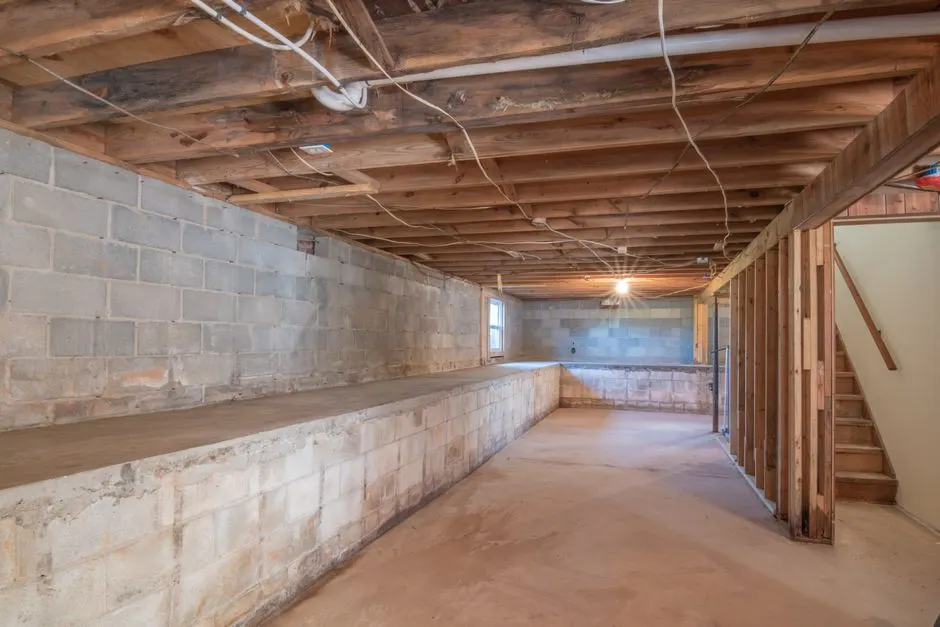
You can dry out a wet basement without a dehumidifier by removing standing water, sealing off the space, and forcing warm, dry air through it with box fans and a steady exhaust path. That combination pulls moisture out of concrete and framing in about 48 to 72 hours if you start within the first day. Below is the exact sequence our technicians use, plus the signs that mean you should stop and call in help.
Basement water extraction is the process of removing standing water and then drying the slab, walls, and framing before mold can colonize. It matters because mold growth starts in 24 to 48 hours, and a damp Utah basement in November will stay damp all winter if you don't move the air.
Why a Wet Basement Needs Fast Action
A wet basement in Utah usually comes from one of four sources: a failed sump pump, a cracked foundation wall, a backed-up floor drain, or snowmelt and rain pushing against the foundation. Each one leaves water where it does the most damage - against wood framing, insulation, and stored belongings.
Concrete and cinder block are porous. They hold water long after the floor looks dry. If you only mop the surface and walk away, that trapped moisture wicks back into the room and keeps humidity above 60 percent, which is the threshold where mold and musty odors take hold. We see this constantly in older homes across Water Damage in Salt Lake City, where 1920s-era block foundations soak up groundwater like a sponge.
Fast action also protects your HVAC system and water heater. A damp mechanical room corrodes electrical panels and shortens the life of every appliance in it.
Step-by-Step: How to Dry a Wet Basement Without a Dehumidifier
Follow these steps in order. Skipping the first one makes everything else slower.
1. Remove standing water first
No fan can dry a floor that still has puddles. Use a wet/dry shop vac, a mop and bucket, or a utility pump for anything deeper than an inch. Dump the water outside, away from the foundation - not down a floor drain that may be the source of the backup.
2. Seal the basement off from the rest of the house
Close the basement door and tape plastic sheeting over any open stairwell. You want to dry one room, not humidify your whole house. This single step cuts drying time by hours.
3. Set up cross-ventilation with box fans
Place one box fan at each end of the room, angled toward the center, and a third fan pointed at the wettest wall. Aim for at least three air changes per hour. A 20-inch box fan moves roughly 2,000 cubic feet per minute - enough to dry a 500-square-foot basement if you keep the air moving.
4. Open windows and doors - but only if the outside air is drier
In November, Utah's outdoor air is cold and dry, so cracking two windows on opposite walls gives you free dehumidification. If it's raining or snowing, keep them shut and rely on fans plus a heat source instead.
5. Add gentle heat
Warm air holds more moisture than cold air. A space heater set to 75°F speeds evaporation from concrete and wood. Keep it at least three feet from anything flammable and never leave it running unattended overnight.
6. Use a box fan to exhaust moist air outside
Point one fan outward through a window or door. This pushes the humid air out instead of letting it recirculate. Pair it with an intake fan on the opposite side for a push-pull effect.
7. Wipe down hard surfaces every few hours
Run a towel or squeegee over walls, pipes, and the floor every three to four hours for the first day. Removing surface moisture by hand is the closest thing to a dehumidifier you have.
8. Pull up wet carpet and padding
Carpet padding acts like a sponge and will not dry in place. Pull it up, hang it outside if possible, and discard it if it's been wet more than 24 hours. The carpet itself can often be saved with fan drying.
9. Run your HVAC fan continuously
Set your thermostat fan to "on" instead of "auto." This circulates air through your home's return ducts and helps pull moisture out of the basement. Change the filter afterward - it will be damp.
10. Monitor humidity with a $15 hygrometer
You cannot dry what you cannot measure. A cheap hygrometer from any hardware store tells you when the room drops below 50 percent relative humidity. That's your finish line.
How Long Does It Take to Dry a Wet Basement?
A wet basement dries in 48 to 72 hours with fans, ventilation, and heat, assuming you start within 24 hours and the water source is stopped. Concrete slabs take the longest - up to four days - because water migrates deep into the pour. Wood framing and drywall dry faster, usually in 24 to 48 hours.
If the humidity is still above 60 percent after three days, you have a hidden water source or a sealed cavity that fans can't reach. That's when professional structural drying in Utah pays for itself. Our truck-mounted desiccant units pull moisture out of wall cavities and subfloor assemblies that box fans never touch.
What to Watch Out For
These are the mistakes that turn a two-day drying job into a two-week mold remediation project.
- Running fans without ventilation. If you don't exhaust the humid air, you're just moving it around the room.
- Drying only the floor. Water wicks up drywall and into baseboards. Cut a 2-inch gap at the bottom of wet drywall to let air in.
- Ignoring the source. If your sump pump failed or a foundation crack is leaking, drying is pointless until you fix it.
- Using a shop vac on sewage water. Category 3 water - anything from a toilet backup or floor drain - carries bacteria. That's a job for sewage backup cleanup in Utah, not a shop vac and a fan.
- Turning off the fans too early. The surface looks dry hours before the concrete is dry. Keep air moving for a full 72 hours.
One more: don't stack cardboard boxes or fabric directly on a damp slab. They trap moisture underneath and grow mold on the bottom. Elevate everything on pallets or shelves until the floor is fully dry.
When to Call a Professional
Call a professional when the water is more than an inch deep, when it came from a sewage line or floor drain, when the basement has been wet longer than 48 hours, or when you smell that musty, earthy odor that means mold is already growing. Those four situations need equipment and training that homeowners don't have.
Water Damage Pros Utah handles basement water removal, crawl space drying, and mold remediation across the Wasatch Front. We find the source, extract the water, dry the structure with commercial air movers and desiccant dehumidifiers, and treat any mold we find. If you're in a newer development where the water table sits high, like the homes we work on in Water Damage in Herriman, we also check your sump pit and discharge line before we leave.
For a full-service approach that covers extraction, drying, and repairs, see our water damage restoration in Utah services. We handle insurance documentation too, so you're not fighting the claim alone.
Frequently Asked Questions
Can I dry out a wet basement without a dehumidifier?
Yes. Box fans, open windows, gentle heat, and manual wiping can dry a basement in 48 to 72 hours if the water is less than an inch deep and you start within 24 hours. You'll need a hygrometer to confirm humidity drops below 50 percent.
How long does it take for a wet basement to dry with just fans?
With three box fans and cross-ventilation, a 500-square-foot basement dries in about 48 to 72 hours. Concrete slabs may take up to four days. If humidity stays above 60 percent after three days, call a professional.
Will a wet basement dry on its own?
No. Without airflow and ventilation, a wet basement stays damp for weeks and grows mold within 24 to 48 hours. Utah's cold, dry November air helps, but only if you open windows and keep fans running.
What happens if I don't dry my basement fast enough?
Mold colonizes wet drywall and wood in 24 to 48 hours. After that, you're looking at mold remediation, replacing drywall, and possibly treating structural framing. Fast drying is always cheaper than mold removal.
Do I need a dehumidifier if I use fans and open windows?
Not always. If outdoor humidity is below 50 percent - common in Utah from October through April - fans and open windows do the job. In summer, when outdoor humidity climbs, a dehumidifier or professional drying is more effective.
Get Help with Water Damage in Utah
If your basement is still wet after 72 hours, or the water came from a sewage line, don't wait. Mold grows fast, and the cost of remediation climbs with every day you delay.
Call Water Damage Pros Utah at (855) 343-0501 for 24/7 emergency water removal and basement drying across the Wasatch Front. We'll find the source, dry the structure, and get your basement back to normal.