
Water Damage Pros Utah logo Water Damage Pros Utah
Get Estimate

Emergency water removal in Utah, day or night

Fast extraction, structural drying, and documented moisture control


When a pipe bursts or a basement floods, emergency water removal in Utah starts with a phone call and a truck rolling your way. We pull standing water, dry the cavities behind your walls, and document every reading so your insurance claim holds up. One call gets a crew that handles extraction, drying, and mold prevention from start to finish.

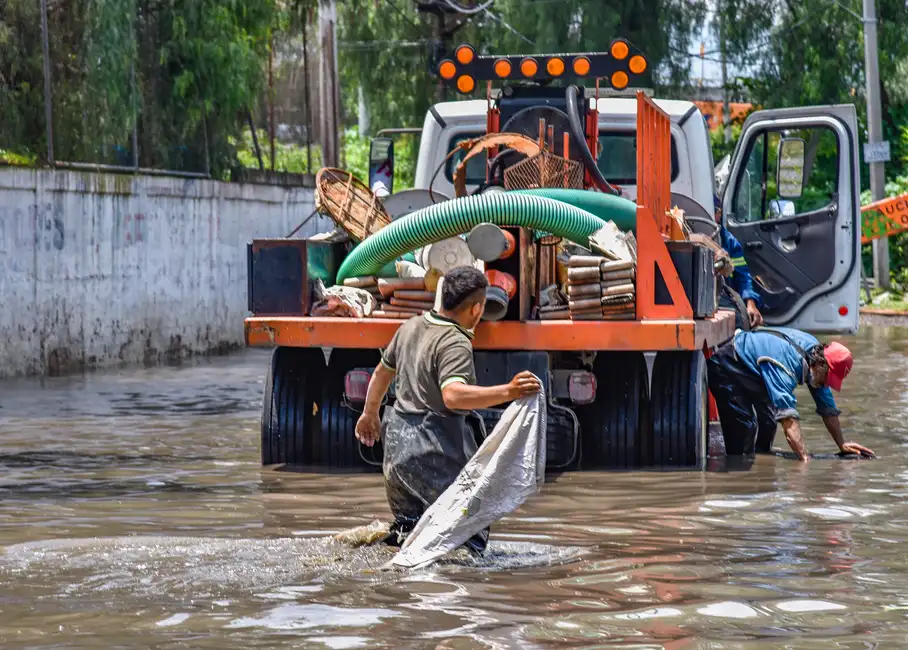
Workers wading through floodwaters near a truck, managing a city crisis after heavy rain.
Licensed Licensed & Bonded
Fully Insured Insured & Bonded
24/7 Emergency Same-Day Response
Warranty Backed Workmanship Guaranteed

What our water removal service covers

Every emergency water removal job includes the full extraction and drying cycle, not just a pump-out. Here is what shows up on your scope, and what we handle as a separate repair once the structure is dry.

Standing water extraction

Truck-mounted water extraction units and portable extractors pull water from carpet, pad, tile, grout, and hardwood. A sump pump clears deeper basement flooding. We extract until the surface is dry to the touch, not just until the puddle is gone.
Moisture mapping

A moisture meter, thermal imaging camera, and borescope map where water traveled behind walls and under floors. This is how we find the hidden saturation that turns into mold two weeks after a job that looked finished.

Antimicrobial treatment

We apply antimicrobial spray to affected framing, drywall, and subflooring after extraction. It slows microbial growth while the structure dries, which matters most on Category 2 and Category 3 losses like sewage backups and appliance leaks.

Structural drying setup

Air movers and dehumidifiers are placed by calculation, not by feel. A typical 1,000 square foot affected area gets 12 to 18 air movers and 2 to 3 dehumidifiers, sized to the IICRC S500 standard for the materials we are drying.

Daily monitoring visits

We return every 24 hours to log readings with a hygrometer and adjust equipment placement. Most residential jobs dry in three to five days. You get the readings in writing, which is the documentation your insurance adjuster needs.

Insurance documentation

Photos, moisture logs, and a room-by-room scope built in Xactimate. We work directly with your adjuster and can bill the carrier in most cases, so you are not fronting the full cost of a covered loss out of pocket.

What emergency water removal in Utah actually involves


Emergency water removal in Utah is the urgent extraction of standing water from a home or business, followed by structural drying that returns wood, drywall, and subflooring to safe moisture levels. It is not a shop vac job. We use truck-mounted water extraction units and portable extractors to pull hundreds of gallons, then place air movers and dehumidifiers to dry the cavities you cannot see. A moisture meter and thermal imaging camera tell us where the water actually went, not just where it pooled.

Most calls we run in Utah start with a burst pipe, a slab leak, a failed water heater, or a sewage backup after heavy spring runoff. Water wicks into insulation and wood subflooring within hours, and mold growth can begin in 24 to 48 hours. If you are searching for emergency water removal near me Utah and the clock is already ticking, that timing matters more than anything else on this page.

What to expect from call to dry

You should know exactly what happens after you hang up the phone. Here is the sequence we run on every emergency water extraction in Utah.

01

Schedule

Call or book online — a real human picks up and confirms a 2-hour arrival window.

02

Diagnose

Licensed tech inspects on-site, then walks you through the cause and your options.

03

Fix

The job is completed to code and done right the first time — no shortcuts, no surprises.

04

Guarantee

Every job backed by a written workmanship warranty — and we stand behind it.

Equipment and standards we work to

Tools & Equipment

Truck-mounted water extraction unit

Pulls hundreds of gallons of standing water from carpet, pad, and hard surfaces far faster than a portable unit, which shortens the drying window on large losses.

Dri-Eaz and Phoenix Restoration Equipment air movers

High-velocity air movers evaporate moisture from surfaces and cavities. We size them by the square footage of the affected area rather than guessing.

Desiccant dehumidifiers

Remove water vapor from the air so it does not re-condense on cool surfaces. Essential in crawl spaces and basements where humidity stays high.

Thermal imaging camera and moisture meter

Find water behind walls and under floors without tearing anything out. This is how we catch hidden saturation before it becomes mold.

Borescope and hygrometer

The borescope inspects inside wall cavities, and the hygrometer reads relative humidity so we know when a space is actually dry, not just dry to the touch.

Sump pump

Clears deeper standing water from basements and crawl spaces where a standard extractor cannot reach the bottom of the pool.

Methods & Standards

IICRC S500 drying protocol

The industry standard for water damage restoration. It sets how we classify the water, calculate how much drying equipment a space needs, and determine when the structure has reached a dry standard.

Dry standard verification

We take moisture readings from an unaffected room and dry the affected area to match. That number, not a visual check, is what tells us the job is finished.

Xactimate documentation

Every scope is built in Xactimate, the estimating platform most insurance carriers use. That means your adjuster sees line items they recognize, which speeds up approval and reduces back-and-forth.

Antimicrobial application

After extraction, we treat affected framing and drywall with antimicrobial spray to slow microbial growth while the structure dries. On Category 3 losses, contaminated porous materials are removed first.

When to call for water extraction

01

A water heater fails overnight and floods the utility room and hallway carpet.

What we do: We shut off the supply, extract the standing water, and pull the saturated carpet pad. The subfloor gets dried with air movers and checked daily with a moisture meter until it matches a dry standard from an unaffected room.

→ Most water heater losses dry in three days, and the carpet can often be re-stretched rather than replaced, which saves you a flooring bill.

02

A frozen pipe splits during a January cold snap in Cache County.

What we do: We arrive, confirm the break, and extract from the wall cavity before the ice thaws and releases the rest of the water. Insulation is removed, framing is dried and treated with antimicrobial spray, and we document the loss for your carrier.

→ Catching it before the thaw prevents a second flood, and the wall cavity dries in four to five days instead of needing full demolition.

03

A roof leak during a spring storm soaks the ceiling and insulation above a bedroom.

What we do: We tarp the roof if needed, extract water from the ceiling cavity, and remove saturated insulation. A desiccant dehumidifier pulls moisture out of the framing while air movers dry the drywall from below.

→ The ceiling dries without a full tear-out in most cases, and you get a documented scope your insurance adjuster can process quickly.

04

A washing machine supply line lets go while you are at work.

What we do: We extract the standing water, map the spread with a thermal imaging camera, and dry the affected rooms. Baseboards are pulled where needed so the wall cavity behind them can dry.

→ A same-day call usually means three to four days of drying and no mold growth, versus a two-week remediation project if it sits.

How water removal runs in Utah

Utah water losses follow the seasons. From November through March, frozen pipes and ice dam leaks drive most of our calls, especially in older homes from Logan down to Santaquin where supply lines run through exterior walls. Spring runoff floods basements and crawl spaces along the Wasatch Front and in valley towns like Salem and Wallsburg. Summer brings monsoon-driven roof leaks and appliance failures. The building stock matters too. Pre-1978 homes require EPA Lead-Safe practices before we disturb painted surfaces, and Utah's expansive clay soils shift foundations, which is why foundation seepage shows up as a recurring problem in some neighborhoods. When you call for 24 hour emergency water removal Utah, we bring equipment sized for the job and a scope built for your carrier, whether you are in a 1920s bungalow or a new build in Herriman.

Neighborhoods We Serve

  • Provo

    A mix of older brick homes near downtown and newer construction on the east bench. Older homes have more galvanized and polybutylene supply lines, which fail more often.

  • Cottonwood Heights

    Sloping lots and mature landscaping mean roof drainage and foundation seepage drive a lot of our spring calls here.

  • Herriman

    Fast-growing new construction with finished basements. Sump failures and appliance supply line breaks are the most common losses we see.

  • Coalville

    Higher elevation means colder winters and a longer freeze season, so frozen pipe calls start earlier and run later than on the Wasatch Front.

  • Grouse Creek

    Remote and rural, with well systems and outbuildings. We stage equipment for the longer drive and plan for limited water access on site.

Local Conditions We Plan For

  • Hard freezes from November through March

    Supply lines in exterior walls and unheated crawl spaces split when temperatures drop. We see a spike in burst pipe calls after the first hard freeze and again during any mid-winter thaw.

  • Spring snowmelt and runoff

    Saturated ground pushes water against foundations and into basements and crawl spaces. Sump pumps that ran fine all winter get overwhelmed in a single wet week.

  • Expansive clay soils along the Wasatch Front

    Soil movement opens foundation cracks and lets groundwater seep in. Foundation seepage losses often recur in the same homes year after year.

  • Pre-1978 housing stock in older Utah towns

    Lead-based paint is common in homes built before 1978. We follow EPA Lead-Safe practices before disturbing painted drywall or trim during a water loss.

Burst pipe in a Provo basement

Before

A supply line split behind a finished basement wall overnight. Carpet was saturated across roughly 600 square feet, and the bottom two feet of drywall was wet. The homeowner found it the next morning with standing water still on the floor.

After

We extracted the standing water in about three hours, removed the saturated drywall and insulation, and ran 14 air movers and 2 dehumidifiers for four days. Final moisture readings matched the dry standard, and the carpet was saved.

Maintenance: We recommended a water alarm near the supply line and an annual check of the shutoff valve. Both are inexpensive and catch a slow leak before it becomes a flood.

Before

A floor drain backed up during heavy spring rain, pushing Category 3 water across roughly 400 square feet of finished basement. Carpet, pad, and the bottom 12 inches of drywall were contaminated and could not be dried in place.

After

We removed the contaminated materials, extracted the remaining water, applied antimicrobial spray, and disinfected hard surfaces. Drying took five days with 10 air movers and 2 dehumidifiers. Tenants moved back in on day four.

Maintenance: We suggested a backwater valve on the floor drain and annual drain cleaning. That combination stops most repeat backups before they start.

Before

Spring runoff left about four inches of standing water under a 1,400 square foot home. The wood subflooring was reading above 24 percent moisture content, and a musty smell was already noticeable upstairs.

After

We pumped the water out with a sump pump, dried the soil and framing for six days, and installed polyethylene sheeting over the ground. Final readings came in under 14 percent, and the odor cleared.

Maintenance: The vapor barrier is the long-term fix. We also recommended checking the exterior grading each fall so runoff drains away from the foundation instead of under it.

Water problems we fix fast in Utah

Most of our calls fall into a handful of categories. If yours is on this list, we have run it hundreds of times and know exactly what it takes to dry it out.

Problem

Burst pipe behind a wall or under a sink

Water pressurizes the wall cavity and saturates insulation and drywall within hours, often without visible pooling on the floor.

Our Fix

We locate the break with a thermal imaging camera, shut off the supply, and extract from the cavity using a borescope-guided approach. Insulation that is saturated gets removed, the framing is dried and treated, and we verify with a moisture meter before closing anything up.

Problem

Slab leak soaking carpet from below

Water wicks up through the slab and into carpet pad, and the source is invisible, so homeowners often wait days before calling.

Our Fix

We pull the carpet and pad, extract the standing water, and dry the slab surface with air movers and desiccant dehumidifiers. Because slab leaks recur, we document the moisture pattern so your plumber can pinpoint the line before we reinstall anything.

Problem

Sewage backup in a basement floor drain

Category 3 water carries bacteria and pathogens, and anything porous it touches has to be removed rather than dried.

Our Fix

We remove contaminated carpet, pad, and drywall, apply antimicrobial spray, and disinfect hard surfaces. Extraction and disposal follow OSHA and IICRC AMRT protocols, and we document the whole process for your carrier.

Problem

Crawl space moisture after spring runoff

Standing water under the house rots joists, warps wood subflooring, and feeds mold growth that eventually shows up as a musty smell upstairs.

Our Fix

We pump out the standing water, dry the soil and framing with air movers, and install polyethylene sheeting over the ground to block future vapor. A hygrometer reading confirms the space is dry before we close it up.

Why Utah homeowners call us first

Why Utah homeowners call us first

Water damage gets worse by the hour. These are the outcomes that matter when you are standing in a wet room at 2 a.m.

  • Fast response, real arrival

    We run 24/7 emergency water removal Utah crews, so a burst pipe at 2 a.m. gets the same dispatch as a 2 p.m. call. Most Utah County and Wasatch Front addresses see a technician within 60 to 90 minutes, and we call you with an arrival window instead of leaving you guessing.

  • Documented for insurance

    Every job gets moisture readings, photos, and a room-by-room drying log built in Xactimate, the same estimating platform most carriers use. That documentation is why adjusters approve our invoices without a fight, and why you are not stuck paying out of pocket for damage that was covered.

  • Mold stopped early

    Mold growth can start within 24 to 48 hours of a leak. We apply antimicrobial spray to affected framing and drywall, then verify with a hygrometer that wall cavities are below 16 percent moisture content before we pull equipment. Catching it in the first day is the difference between drying and demolition.

  • Equipment that finishes the job

    We run Dri-Eaz and Phoenix Restoration Equipment air movers and desiccant dehumidifiers, not box fans from a big-box store. A typical 1,000 square foot affected area gets 12 to 18 air movers and 2 to 3 dehumidifiers, sized by the IICRC S500 standard rather than by guesswork.

What water removal costs in Utah

Emergency water removal cost Utah homeowners pay depends on how much water there is, what category it is, and how long drying takes. Typical 2026 residential pricing runs $1,200 to $3,500 for extraction and dry-out, with small contained jobs starting near $650 and large basement or sewage losses running $5,000 or more. We give you a written price before equipment comes off the truck, and we bill your carrier directly in most covered cases.

Typical Investment Range

$650 - $5,000+ depending on scope

The cost of drying a structure properly is almost always less than the cost of tearing out moldy drywall and replacing a subfloor later. We document everything for your carrier, which means most covered losses end up costing you your deductible and nothing more.

What changes the price

01

Affected square footage

A single room costs far less than a whole basement. Extraction time, equipment count, and monitoring visits all scale with the size of the wet area, which is why we measure before we quote.

02

Water category

Category 1 water from a clean supply line is the simplest. Category 2 and Category 3 losses like sewage backups require removal of contaminated materials, antimicrobial treatment, and disposal, which adds labor and cost.

03

Materials affected

Carpet and pad dry faster than hardwood, tile, or wood subflooring. Materials that cannot be dried in place have to be removed and replaced, and that shows up in the scope.

04

Drying duration

Most jobs dry in three to five days, but saturated slab or thick framing can take longer. Each additional day means another monitoring visit and another day of equipment rental on the invoice.

05

Access and containment

Crawl spaces, finished basements with limited entry, and homes with asbestos or lead paint require extra setup. Containment and EPA Lead-Safe practices add time but keep the job safe and compliant.

06

After-hours dispatch

We run 24/7 and do not charge a separate emergency premium for overnight calls. The price you get is based on the work, not the hour you called.

Licensed, certified, and documented

Licensed & Certified

  • IICRC WRT (Water Restoration Technician) — issued by Institute of Inspection, Cleaning and Restoration Certification
  • IICRC ASD (Applied Structural Drying) — issued by Institute of Inspection, Cleaning and Restoration Certification
  • IICRC AMRT (Applied Microbial Remediation Technician) — issued by Institute of Inspection, Cleaning and Restoration Certification
  • EPA Lead-Safe Certification — issued by U.S. Environmental Protection Agency
  • OSHA 10 Construction Safety — issued by Occupational Safety and Health Administration

Verified Reviews

Google ★★★★★4.9

Called at 1 a.m. about a burst pipe and they picked up on the first ring. Crew was at the house in about an hour, extracted the water, and had drying equipment running before sunrise. The daily moisture logs they sent made my insurance claim easy.

Yelp ★★★★★4.8

Our crawl space flooded after spring runoff and two other companies wanted to just pump it and leave. These guys dried the framing, installed a vapor barrier, and showed me the readings. No musty smell this year.

BBB ★★★★★4.9

Sewage backup in our basement, which is about the worst call you can make. They handled the contaminated material removal and disinfection, worked directly with our adjuster, and the final invoice matched the estimate. Professional from start to finish.

Google ★★★★★5.0

Water heater failed on a Sunday and flooded the hallway. They gave me a price before starting, dried everything in three days, and even re-stretched the carpet instead of pushing me to replace it. Honest work at a fair price.

Trained to dry it right the first time

Our technicians hold IICRC WRT (Water Restoration Technician) and IICRC ASD (Applied Structural Drying) certifications, and several carry IICRC AMRT for microbial work. That training is what separates a crew that dries a floor from one that dries the wall cavity behind it. We work to the IICRC S500 standard on every job, follow EPA Lead-Safe practices on pre-1978 homes, and hold OSHA 10 cards. We are a licensed Utah contractor, insured and bonded, and we document every job the way an adjuster expects to see it.

  • IICRC WRT and ASD certified technicians on every water loss
  • IICRC AMRT training for jobs with mold growth or sewage contamination
  • EPA Lead-Safe practices followed on pre-1978 Utah housing stock
  • OSHA 10 certified crews working safely around electrical and structural hazards
  • Licensed Utah contractor, insured and bonded, with Xactimate documentation
Get Started Today
Trained to dry it right the first time

Cities we serve for water removal

Our Utah emergency water extraction crews cover the Wasatch Front, the northern valleys, and the rural communities in between. Whether you are in a Provo bungalow or a ranch outside Grouse Creek, we bring the same certified technicians, the same drying equipment, and the same documentation. Call (855) 343-0501 and we will confirm coverage and an arrival window for your address.

Provo

Older brick homes near downtown and newer builds on the east bench both see supply line failures. We extract, dry, and document for Provo homeowners and landlords.

Herriman

Fast-growing Herriman has a lot of finished basements and new appliance hookups. Sump failures and washing machine line breaks are our most common calls here.

Roy

Roy sits on the northern Wasatch Front where hard freezes split exterior wall pipes. We handle frozen pipe extraction and wall cavity drying throughout the city.

Cottonwood Heights

Sloping lots and mature trees mean roof leaks and foundation seepage. We run extraction and structural drying for Cottonwood Heights homes year round.

Santaquin

Santaquin's mix of older farmhouses and new subdivisions means both aging plumbing and modern appliance failures. We cover both with the same certified crew.

Salem

Spring runoff pushes water into Salem basements and crawl spaces. We pump, dry, and install vapor barriers to stop the problem from coming back.

Wellsville

Wellsville's cold winters and rural water systems make frozen pipes a recurring issue. We extract fast and dry framing before mold can take hold.

Coalville

At higher elevation, Coalville sees a longer freeze season. We stage equipment for the drive and handle burst pipe and crawl space flooding calls.

Henefer

Henefer's small, tight-knit community gets the same 24/7 response as the Wasatch Front. We handle extraction, drying, and insurance documentation.

Newton

Newton homes on well systems and septic see supply line and appliance failures. We extract standing water and dry the structure to a verified standard.

Scipio

Scipio is rural enough that the nearest plumber is a drive away. We bring extraction and drying equipment with us so the job gets done in one trip.

Wallsburg

Wallsburg sits in a valley where snowmelt drains toward foundations. We handle basement and crawl space flooding with pumps and desiccant dehumidifiers.

Lynndyl

Lynndyl properties are spread out and often include outbuildings. We plan for the drive and bring enough equipment to dry the whole loss in one setup.

Grouse Creek

Grouse Creek is remote ranch country with limited water access on site. We stage equipment ahead of the drive and handle extraction and drying start to finish.

Questions Utah homeowners ask us

Real answers to the questions we hear most often from local homeowners and property managers.

How quickly can you respond to emergency water removal in Utah?
Most Wasatch Front addresses see a technician within 60 to 90 minutes, and outlying areas like Scipio or Grouse Creek typically get a crew within two to three hours. We dispatch 24 hours a day, including holidays. When you call, we triage the leak immediately and walk you through shutting off the water supply so damage stops spreading before we arrive.
How much does emergency water removal cost in Utah?
Typical 2026 pricing runs $1,200 to $3,500 for a residential extraction and dry-out, with small contained jobs starting near $650 and large basement flooding or sewage cleanup running $5,000 or more. Square footage, water category, and how many days of drying you need drive the number. We give you a written price before equipment comes off the truck.
What should I do before emergency water removal arrives in Utah?
Shut off the main water valve, kill power to any flooded rooms at the breaker, and move furniture and electronics off wet carpet if it is safe to do so. Do not run a household vacuum or shop vac in standing water. Take photos of the damage for your insurance claim, then leave the extraction and drying to us.
Do you offer 24/7 emergency water extraction in Utah?
Yes. We run crews around the clock, every day of the year. A frozen pipe that lets go at 2 a.m. in January gets the same response as a mid-afternoon water heater failure. Call (855) 343-0501 and a dispatcher will confirm your address and give you an arrival window before you hang up.

Other services that pair with water removal

Water Damage Restoration

Extraction is only the first phase. Our water damage restoration service rebuilds what the water ruined, from drywall and insulation to paint and trim, so your Utah home is put back the way it was before the leak.

View Water Damage Restoration

Flood Cleanup

When runoff or a storm pushes muddy water into your home, flood cleanup goes beyond extraction. We remove contaminated material, disinfect surfaces, and dry the structure so bacteria and odor do not linger in your Utah property.

View Flood Cleanup

Basement Water Extraction

Basements flood fast and dry slow. Our basement water extraction crews use sump pumps and truck-mounted units to clear standing water, then set drying equipment sized for below-grade spaces where humidity hangs around longer.

View Basement Water Extraction

Crawl Space Water Removal

Crawl space moisture rots joists and feeds mold long before you smell it upstairs. We remove standing water, dry the soil and framing, and lay polyethylene sheeting to keep ground moisture from wicking back into your Utah home.

View Crawl Space Water Removal

Sewage Backup Cleanup

A sewage backup is Category 3 water and needs more than a wet vac. We remove contaminated materials, apply antimicrobial spray, and disinfect the space so your Utah home is safe to live in again.

View Sewage Backup Cleanup

Storm Damage Restoration

After a Utah storm drives rain through a roof or window, we tarp, extract, and dry. Storm damage restoration covers the water removal and the repairs so you are not juggling separate contractors while your ceiling drips.

View Storm Damage Restoration

Call now for emergency water removal in Utah

Water spreads fast and mold follows within 48 hours. Our crews are licensed, insured, and answering the phone right now. Call (855) 343-0501 and we will dispatch a certified technician with an arrival window you can count on.

Call (855) 343-0501 Get Emergency Help

Contact Water Damage Pros Utah

Call us at (855) 343-0501 any time, day or night. A live dispatcher answers, not a machine. We serve the entire state of Utah and can have a crew at your door within 60 to 90 minutes for most Wasatch Front addresses. You can also email info@waterdamageprosutah.com.

Water Damage Pros Utah


  • Address

    Utah

  • Hours

    Mon–Fri: 7AM – 7PM
    Sat: 8AM – 4PM
    Sun: Emergency Only
    24/7 Emergency Available

Call (855) 343-0501 Get Quote
Call Quote