
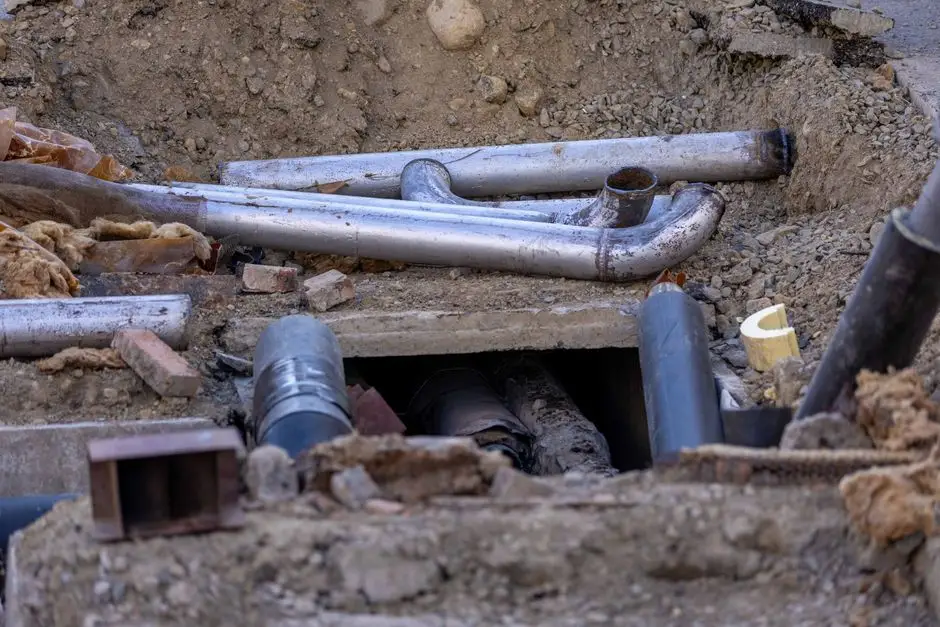
Frozen pipes announce themselves in a handful of unmistakable ways: frost on the pipe surface, a faucet that sputters or whistles instead of running, a drain that suddenly stops, or a faint sewage smell drifting from a wall. If you see or hear any of those, the pipe has likely already frozen - and the clock is ticking before it splits and floods your floor. This guide walks you through the warning signs, the safe thawing steps, and the point where you should stop and call a pro.
We handle frozen-pipe calls across the Wasatch Front every winter, and the pattern is always the same: the pipe freezes quietly overnight, then thaws fast when the sun hits the wall, and that's when the water starts pouring. Knowing the signs early is the whole game.
What Frozen Pipes Look and Sound Like
Frozen pipes in Utah typically show up as a combination of visible frost, odd faucet behavior, and smells that don't belong. The most reliable sign is a faucet that produces nothing, a thin trickle, or a sputter of air when you open it fully. If the water pressure drops to a dribble on a cold morning, that line is at least partially blocked by ice.
Here are the signals we look for on a service call:
- Visible frost on exposed pipes in the basement, crawl space, or under a sink cabinet.
- Whistling or banging when you turn on a tap - air trapped behind an ice plug.
- No water or low pressure from one fixture while others run fine.
- A drain that won't clear, because the trap or branch line is frozen solid.
- A sewage or musty smell from a drain - a sign the vent or drain line is blocked by ice.
- Bulging or discolored drywall near an exterior wall, which means the pipe has already cracked.
That last one is the emergency. A frozen pipe that has split will not leak until it thaws, and then it releases water fast - often 4 to 8 gallons per minute on a main line. If you see a bulge, shut off the main water valve immediately and call for emergency water removal in Utah before the ceiling comes down.
Why Utah Homes Freeze Pipes So Easily
Utah homes freeze pipes so easily because our winters swing hard between daytime sun and single-digit nights, and most of our housing stock puts water lines in exterior walls, unheated crawl spaces, and garages. A pipe doesn't need to be outdoors to freeze - it just needs to sit below 32°F for a few hours. Overnight lows along the Wasatch Front routinely hit 10°F to 20°F from December through February, and in Logan and the Cache Valley they drop lower and stay there longer.
Older homes in Ogden, Provo, and Salt Lake City were built with plumbing in exterior north-facing walls, which is the worst possible placement. Newer builds in Lehi, Herriman, and Eagle Mountain often run PEX through unheated attics and garages, and those lines freeze just as fast when a garage door stays open. If your home has any of those layouts, treat every hard freeze as a real risk.
We also see a spike in calls after a cold snap breaks, because that's when ice plugs melt and the cracks behind them start leaking. If you're already seeing water, our team handles water damage restoration in Utah from the first extraction through the final dry-out, so you're not juggling three different contractors.
How Do You Thaw Frozen Pipes Without Breaking Them?
You thaw a frozen pipe by warming it slowly from the faucet end back toward the frozen section, using a hair dryer, heat lamp, or wrapped towels soaked in hot water - never an open flame. Slow and steady is the rule. A pipe that goes from 20°F to 200°F in thirty seconds will crack; one that warms over 20 to 40 minutes usually won't.
Here's the sequence we use on calls:
- Open the nearest faucet to the frozen line - both hot and cold sides. This gives melting water somewhere to go and tells you the moment flow returns.
- Find the frozen section by feeling for the coldest spot. It's usually where the pipe meets an exterior wall or where it enters an unheated space.
- Apply gentle heat with a hair dryer on low, a space heater aimed at the cabinet, or towels wrung out in hot water and wrapped around the pipe.
- Work from the faucet backward toward the ice plug. If you start at the far end, trapped pressure can split the pipe.
- Keep the faucet open until full pressure returns, then close it and check for leaks along the thawed run.
If the frozen line is inside a wall or under a slab, stop. You can't safely thaw what you can't see, and poking around inside a wall usually causes more damage than the freeze itself. That's the point where we send a technician with thermal imaging to locate the ice plug without opening up the whole wall.
Once the line is flowing, watch for drips. A pipe that froze and thawed once has already been stressed, and we see repeat failures in the same spot the following winter. If you're in an older home in Water Damage in Salt Lake City with original galvanized lines, plan on replacing that section before next season.
What Should You Never Do to a Frozen Pipe?
Never use an open flame, a propane torch, or a heat gun on high to thaw a pipe. This is the single most common mistake we see, and it causes house fires and burst copper every winter. A torch can boil the water inside the pipe, flash-steam it, and split the metal in seconds - and if the pipe is near wood framing or insulation, you've traded a $400 repair for a $40,000 fire claim.
Other mistakes that turn a small freeze into a big bill:
- Pouring boiling water down a drain to clear an ice block - it cracks porcelain and PVC.
- Using a hammer or screwdriver to chip ice off a pipe. You'll puncture it.
- Leaving the house with a faucet dripping and the heat turned down below 55°F.
- Ignoring a slow drain for a week, then running a dishwasher or washing machine into a frozen line.
- Thawing a pipe you can't see and hoping for the best. If it's behind drywall, get eyes on it first.
If a frozen drain has already backed sewage into a basement or laundry room, that's a contaminated-water problem, not a plumbing problem. We handle sewage backup cleanup in Utah with the right PPE and disposal, which is not something you want to DIY with a shop vac and a garden hose.
When to Call a Professional
Call a professional when the frozen pipe is inside a wall, under a slab, or in a crawl space you can't safely reach - or when you've thawed the line and it's still not flowing after 45 minutes of gentle heat. Those are the cases where a thermal camera and a licensed plumber save you money, because guessing means cutting drywall in the wrong place.
Call us immediately if you see any of these:
- Water staining, bulging, or a soft spot on a ceiling or wall.
- A water meter that keeps spinning with every fixture off.
- Multiple frozen fixtures at once, which usually means the main line is iced.
- A frozen line in a crawl space, where a burst pipe soaks insulation and joists before you notice.
Our team at Water Damage Pros Utah handles both sides of the problem - we thaw and repair the line, then dry the structure if water got out. If the freeze happened in a vented crawl space, we pull the standing water with crawl space water removal in Utah and dry the joists before mold sets in. Mold can start colonizing wet framing in 24 to 48 hours, so speed matters more than saving a service-call fee.
Frequently Asked Questions
How long does it take for pipes to freeze at 20 degrees?
An exposed pipe in an unheated space can freeze in 4 to 6 hours at 20°F, and faster if there's wind. Pipes in exterior walls take longer - usually 8 to 12 hours - because the wall insulates them somewhat. The risk climbs sharply once overnight lows stay below 20°F for two or more nights in a row.
Will a frozen pipe thaw on its own?
Yes, if the outdoor temperature rises above freezing and the pipe is in a space that warms up. But a pipe that thaws on its own can also release water through a crack it formed while frozen. Open the nearest faucet, watch for drips, and check the water meter with everything off.
How do I know if a frozen pipe has already burst?
A burst pipe shows up as water staining, a bulging wall, a hissing sound behind drywall, or a water meter that keeps moving with all fixtures closed. If you see any of those, shut off the main valve and call for water damage restoration immediately - the leak will get worse as the ice melts.
Should I leave faucets dripping during a Utah cold snap?
Yes. A pencil-thin drip on the most exposed fixture keeps water moving and relieves pressure, which is the main cause of splits. Keep cabinet doors open under sinks on exterior walls, and hold your thermostat at 58°F or higher even when you're away. The extra few dollars on your gas bill is cheaper than a burst line.
Does homeowners insurance cover frozen pipe damage in Utah?
Most Utah policies cover the water damage from a burst pipe, but many exclude the pipe repair itself and deny claims if the home was left unheated. Document everything with photos before cleanup, keep receipts, and call your adjuster the same day. We can provide a moisture report and drying log to support your claim.
Get Help with Water Damage in Utah
If a frozen pipe has already let go, every hour you wait adds thousands to the repair bill - water wicks into drywall, insulation, and subfloor fast. We're on call 24/7 across the Wasatch Front with extraction, structural drying, and full repairs under one roof.
Call Water Damage Pros Utah at (855) 343-0501 and we'll be on our way.