
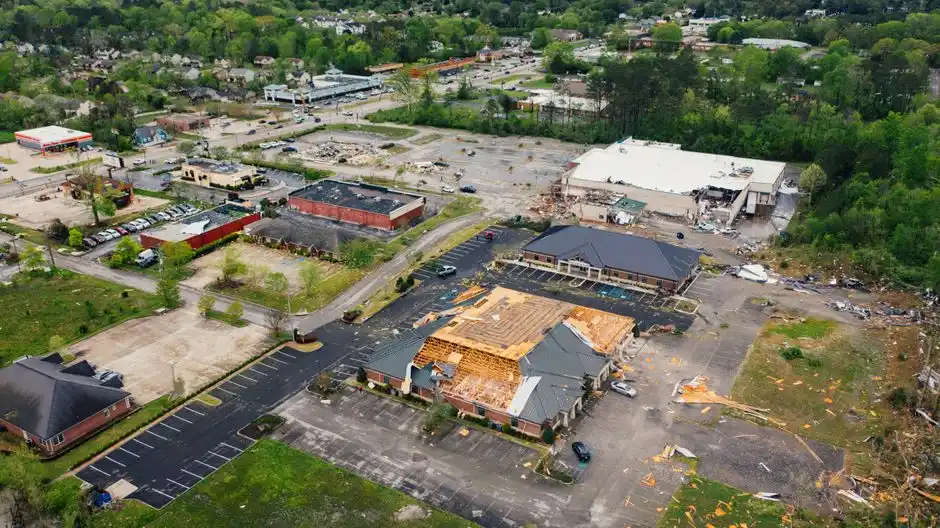
Hail storms in Ogden damage your home by cracking shingles, punching through vents, and driving water into your attic, walls, and ceilings - and the water damage is usually worse than the visible dents. Storm damage restoration in Ogden after a hail storm means stopping that water intrusion, drying the structure, and repairing the roof before the next rain hits. This guide covers what hail actually does to Utah homes, the first 24 hours, and how professional storm damage restoration in Utah works from start to finish.
Why Hail Storms in Ogden Cause So Much Water Damage
Ogden sits right where the Wasatch Front funnels storms off the mountains, and that geography produces hail more often than most Utah cities see. Warm valley air pushes up against cold mountain air, and the result is pea-sized to golf-ball-sized ice falling at 50 to 70 mph. When that ice hits your roof, it doesn't just bounce off.
Asphalt shingles are designed to shed water, not absorb impact. A direct hit from a 1-inch hailstone can knock the mineral granules loose, crack the mat underneath, and leave a soft spot that looks fine from the ground. The next rain finds that soft spot. Water wicks into the underlayment, then the decking, then your attic insulation.
We see this constantly in Ogden's older neighborhoods - the homes built in the 1950s and 1960s around Harrison Boulevard and the East Bench tend to have thinner sheathing and older shingles that take hail damage harder than newer builds. If you're dealing with water intrusion anywhere along the Wasatch Front, our water damage restoration in Utah team handles everything from emergency extraction to full structural drying.
One more thing about Ogden specifically: hail often comes with wind. A 60 mph gust can lift shingle edges just enough for ice to get underneath, and that's where the real damage starts. You won't see it from your driveway.
What Does Hail Damage Look Like on a Utah Roof?
Hail damage on a Utah roof shows up as bruised shingles, exposed mat, dented vents, and cracked skylights - and most of it isn't visible from the ground. Here's what our technicians look for when we inspect after a storm:
- Bruised shingles: soft spots where granules are gone and the mat is exposed. They feel like a bruise on an apple.
- Dented metal: gutters, downspouts, vents, and flashing take hits that shingles don't show.
- Cracked seals: pipe boots and vent collars crack at the base, opening a direct path for water.
- Granule loss: check your gutters and the ground below downspouts. A heavy granule deposit after a storm means your shingles took a beating.
- Attic staining: dark streaks or damp insulation in the attic mean water is already getting through.
If you see any of these, get the roof looked at before the next storm. A small crack in a vent boot can dump 20 to 30 gallons of water into your attic during a single hard rain.
The First 24 Hours After a Hail Storm
What you do in the first 24 hours after a hail storm determines how much of your home you save. Water spreads fast - it travels along joists, soaks into drywall, and starts feeding mold within 24 to 48 hours in Utah's dry climate. Here's the order we recommend:
- Check the attic first. Look for daylight through the roof deck, wet insulation, or dark stains on the rafters. That's your first sign of intrusion.
- Look at ceilings and walls. Brown rings, bubbling paint, or soft spots mean water is pooling above the drywall.
- Move valuables out of the way. If you have a leak, get furniture, electronics, and boxes off the floor and away from the wall.
- Document everything. Photos of the hail, the roof, the dents, and any interior water damage. Your insurance adjuster will want them.
- Call for help early. The sooner we get drying equipment in, the less tear-out you'll need.
If water is actively coming through the ceiling, put a bucket under it and poke a small hole in the bulge to let it drain. Sounds counterintuitive, but a controlled drip is better than a ceiling collapse. Then call us.
How Storm Damage Restoration in Utah Actually Works
Storm damage restoration in Utah is the process of stopping water intrusion, extracting standing water, drying the structure, and repairing the damage hail caused - in that order. Here's what our process looks like from the moment you call:
Step 1: Emergency Board-Up and Water Stop
If hail has punched a hole in your roof or shattered a window, we tarp or board it up first. Stopping the water is step one. We can't dry a house that's still getting rained on.
Step 2: Water Extraction and Structural Drying
We pull standing water with truck-mounted extractors, then set up industrial air movers and dehumidifiers. In a typical Ogden home, drying takes 3 to 5 days. We monitor moisture levels daily and don't pull equipment until the readings match a dry standard.
If water has reached your lower level, our basement water extraction in Utah crew handles the extraction and drying down there too. Hail storms often send water down foundation walls and into basements through cracks that were already there.
Step 3: Mold Prevention and Remediation
Utah's dry air helps, but wet drywall and insulation still grow mold fast. If we find mold during the drying process, we handle it before we close anything up. Our mold remediation in Utah team uses containment and HEPA filtration to keep spores from spreading through the house.
Step 4: Repairs and Reconstruction
Once everything is dry and clean, we repair the roof, replace damaged drywall, and put your home back together. You get one point of contact from the first call to the final walkthrough.
Common Mistakes Ogden Homeowners Make After Hail
The biggest mistake after a hail storm is waiting to see if the leak stops on its own. It won't. Here are the ones we see most often:
- Assuming the roof is fine because you don't see damage from the ground. Hail damage is almost always in the details - vents, boots, and flashing.
- Climbing on the roof yourself. Wet shingles after a storm are slick, and hail-damaged shingles crumble underfoot. Leave it to us.
- Waiting for the insurance adjuster before calling a restoration company. Every day you wait, water spreads further and the repair bill grows.
- Only fixing the roof and ignoring the water damage inside. If water got into your attic or walls, fixing the roof alone leaves a mold problem behind.
- Not documenting the storm. Take photos of the hail on the ground, the dents, and any interior damage. It makes the claim smoother.
One more: don't hire a storm chaser. After every big hail event, out-of-state crews show up in Ogden, take deposits, and disappear. Hire a local company you can call back if something goes wrong.
When to Call a Professional
Call a professional when water is actively coming into your home, when you see staining on ceilings or walls, or when the hail was large enough to dent your gutters. Those are the three signs that tell us the roof took real damage.
We've handled storm damage all over Northern Utah, and we know how Ogden homes are built. If you're in the area and need help, our water damage restoration Ogden Utah team is ready to respond. We'll inspect the roof, check the attic, and tell you exactly what needs to happen - no guesswork.
If you're in a neighboring city, we serve the whole Wasatch Front. Our water damage restoration Layton Utah crews handle the same storm damage issues we see in Ogden - hail, wind-driven rain, and the water intrusion that follows.
Frequently Asked Questions
How long does storm damage restoration take after a hail storm?
Most hail storm restorations take 5 to 10 days from start to finish. Drying alone takes 3 to 5 days. Roof repairs and interior reconstruction add another 2 to 5 days depending on the scope. Larger jobs with significant water intrusion can take 2 to 3 weeks.
Does homeowners insurance cover hail damage in Utah?
Yes, most Utah homeowners policies cover hail damage to the roof and resulting water damage. You'll pay your deductible, and the insurance covers the rest. Document everything before you file, and call us early - we work with adjusters regularly and can help you through the process.
Can hail damage cause a roof leak later?
Yes. Hail bruises shingles and cracks vent seals, and those weak spots let water in during the next rain - sometimes weeks or months later. That's why we recommend an inspection after any storm with hail larger than a pea. Catching it early saves thousands.
How do I know if my roof has hail damage?
Check your gutters for granule buildup, look for dents on vents and downspouts, and inspect the attic for stains or daylight. If you see any of those, call us for a professional inspection. We check the parts of the roof you can't see from the ground.
What should I do immediately after a hail storm?
Check your attic and ceilings for leaks, move valuables away from any water, and take photos of the damage. If water is actively coming in, call us right away. Don't climb on the roof - wet, hail-damaged shingles are dangerous.
Get Help with Water Damage in Ogden
Hail storms in Ogden are a fact of life. The water damage they leave behind doesn't have to be. We handle storm damage restoration in Ogden from emergency tarping to full reconstruction, and we work directly with your insurance company.
Call Water Damage Pros Utah at (855) 343-0501 and we'll be on our way. One call, and we'll take it from there.